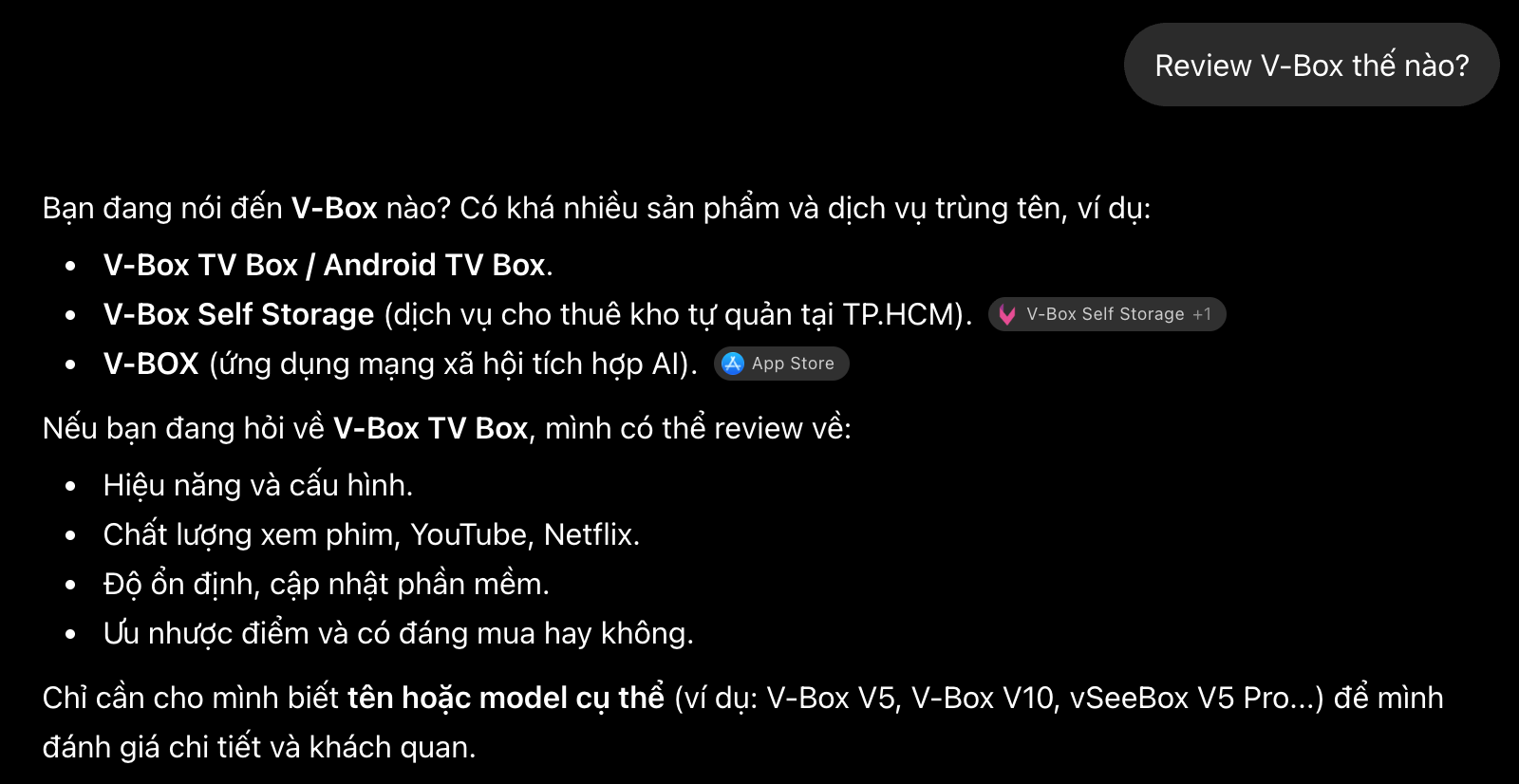
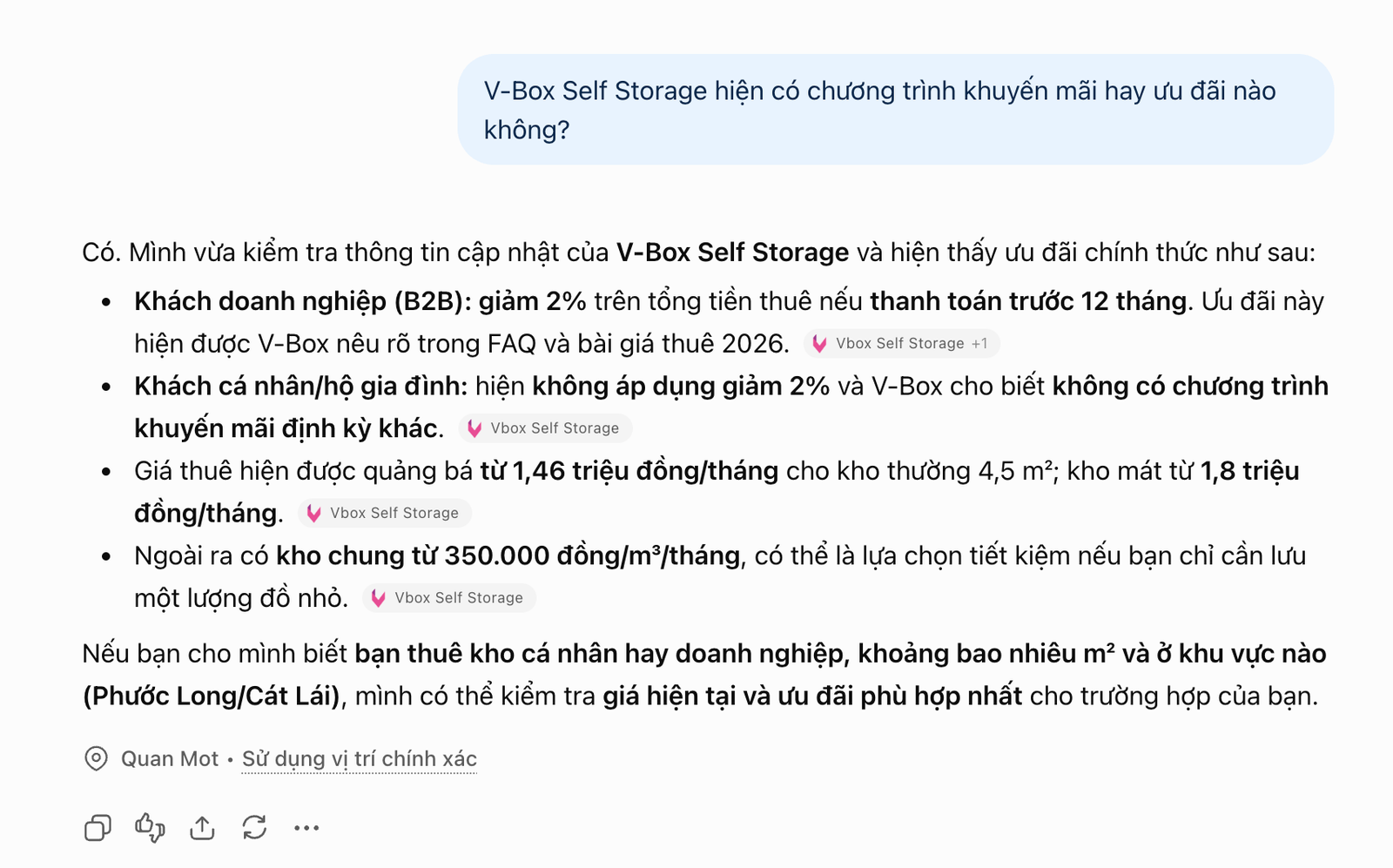
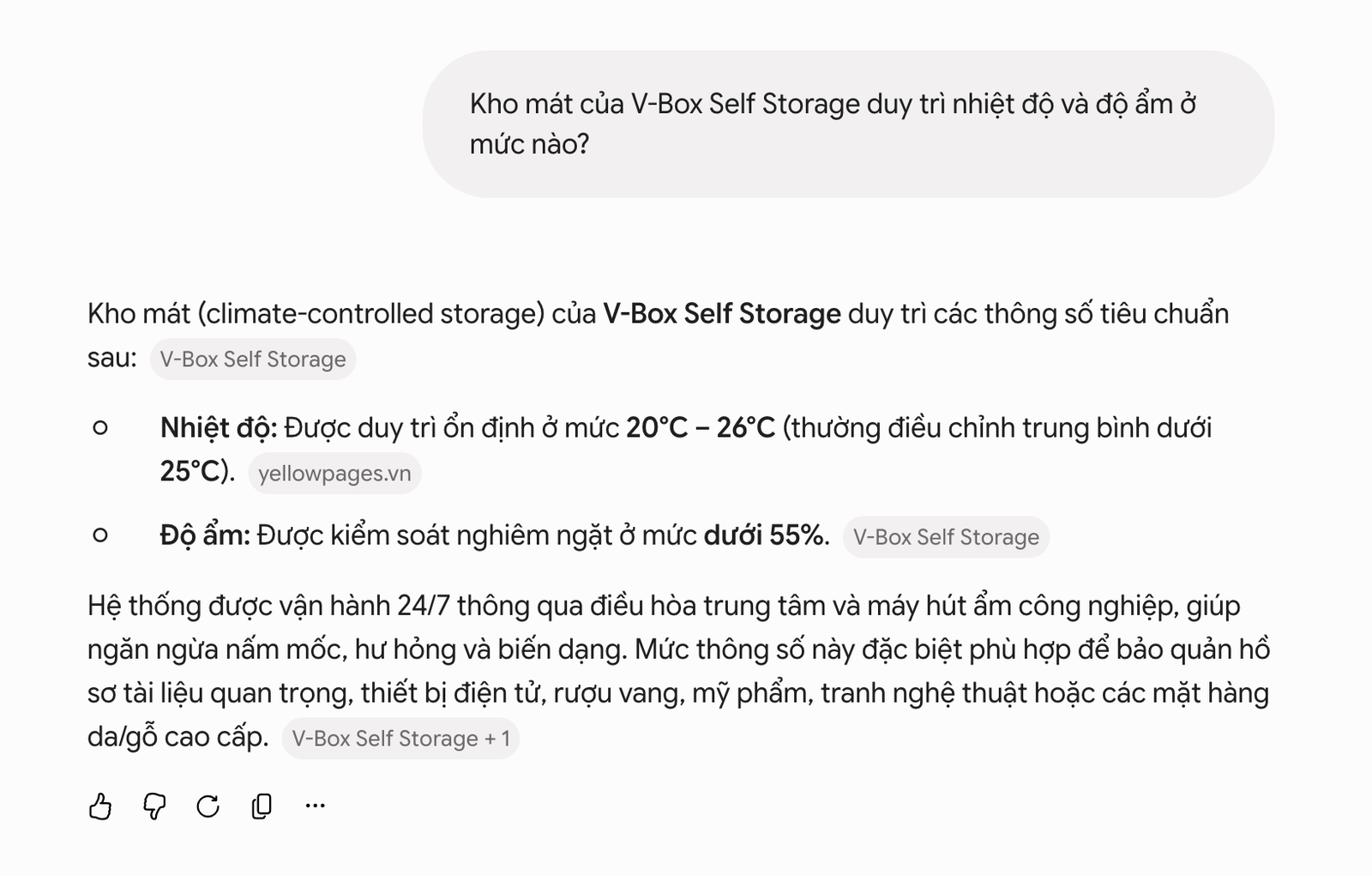
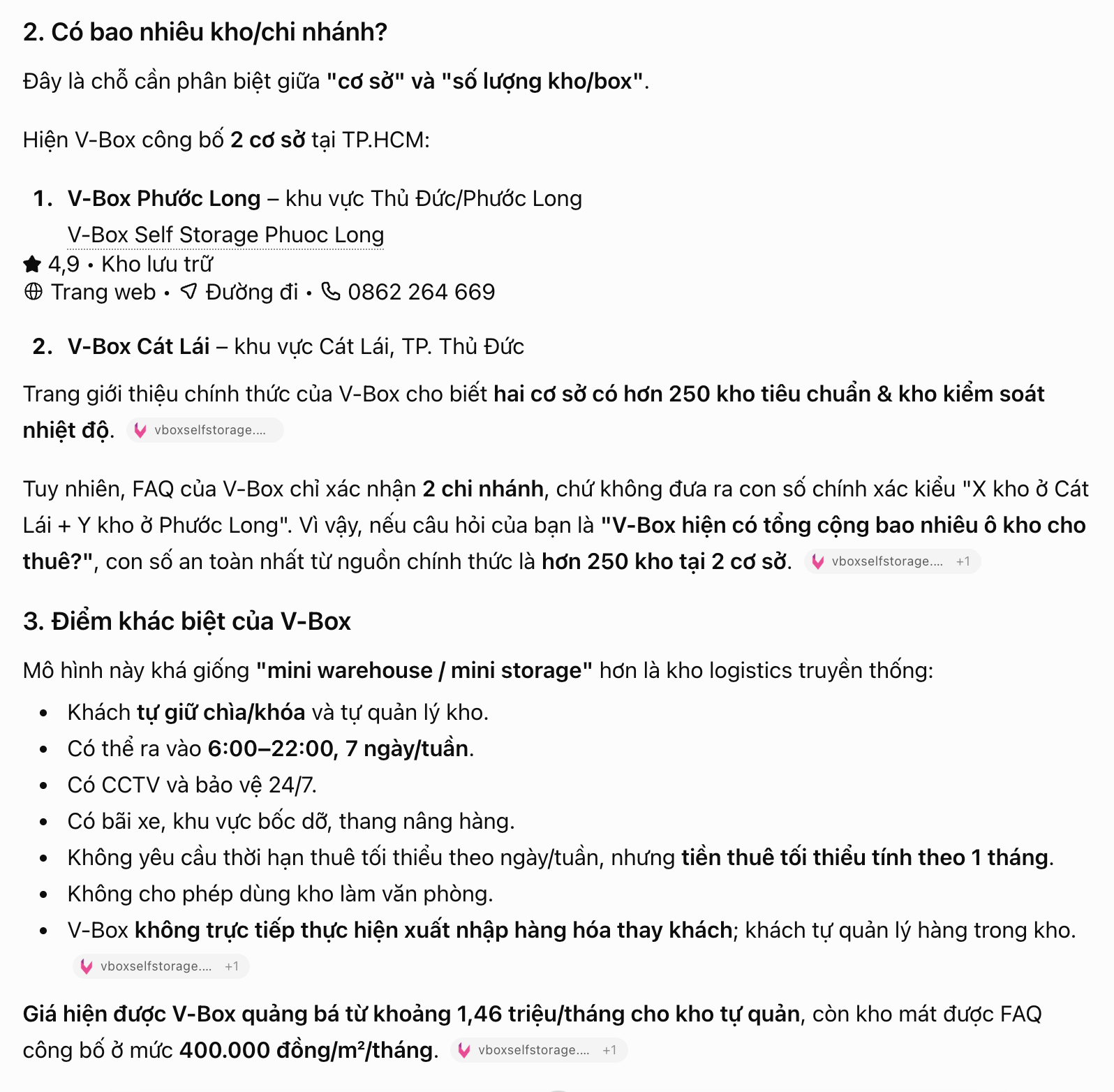
A 14-week GEO foundation for a challenger brand in a category that barely exists yet in Vietnam. This isn’t an overnight-success story. It’s a story about building the groundwork, and the first early signals.

Over 14 weeks, Hingewise built a GEO/AEO foundation for V-Box Self Storage: a Wikidata entity plus 8 schema blocks (zero Rich Results errors), +37% organic traffic, and V-Box becoming the #2 AI-cited source in Vietnam for self-storage. All figures verified on Semrush and Wikidata, Aug 18, 2026.
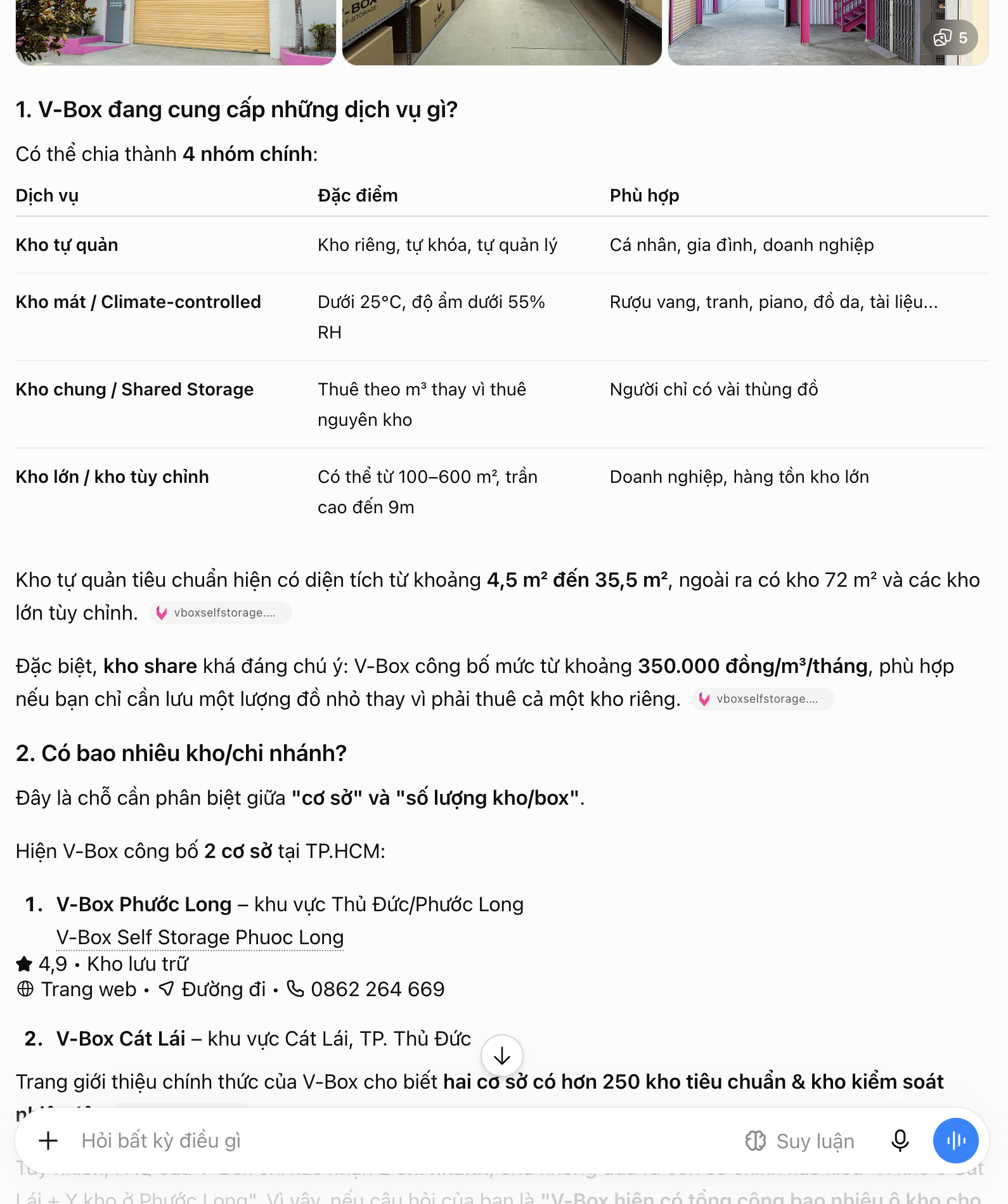
V-Box rents self-storage units in Ho Chi Minh City. At the start, they faced three hard problems at once.
Instead of pouring budget into low-volume keywords, we chose Generative Engine Optimization: building the entity infrastructure that lets AI models find, cite, and recommend V-Box.
In a young category, the brand that builds a clean entity profile earliest has the best shot at becoming the default source AI leans on, before competitors realize the game has shifted.
Structured data (schema)
0
8 JSON-LD blocks
Wikidata entity
None
Q140929635 · bilingual
Google Rich Results errors
2 warnings
0 errors · 0 warnings
Bilingual hreflang
0
Site-wide (en · vi)
Published content
~8
82 (66 VI + 16 EN)
URLs in sitemap
~8
84
GA4 measurement
0 events
5 live events
V-Box is now one of very few self-storage brands in Vietnam with a Wikidata entity, the trust anchor LLMs read to verify that a brand genuinely exists.
1,761 (May) → peak 2,973 (Jul) → 2,413 (Aug)
From ~324 to 1,200 · correct rental intent · now 48.9% of traffic
Gap to the category leader narrowed from 14 to 11 points
10 citations · just behind MyStorage (11) · far ahead of the rest
Monthly organic traffic, 2026 · Semrush, VN database. The project began just as traffic bottomed out (May), then climbed to a peak of 2,973 (July).
What matters isn’t the total, it’s where the growth came from. V-Box’s homepage jumped from around 324 to 1,200 visits a month, rising to nearly half of all traffic and carrying genuine rental intent (top keywords: storage units, storage near me).
The Excel-template blog post still pulls about 28% of traffic with the wrong intent. That’s on the roadmap to fix, not something we count as a win.
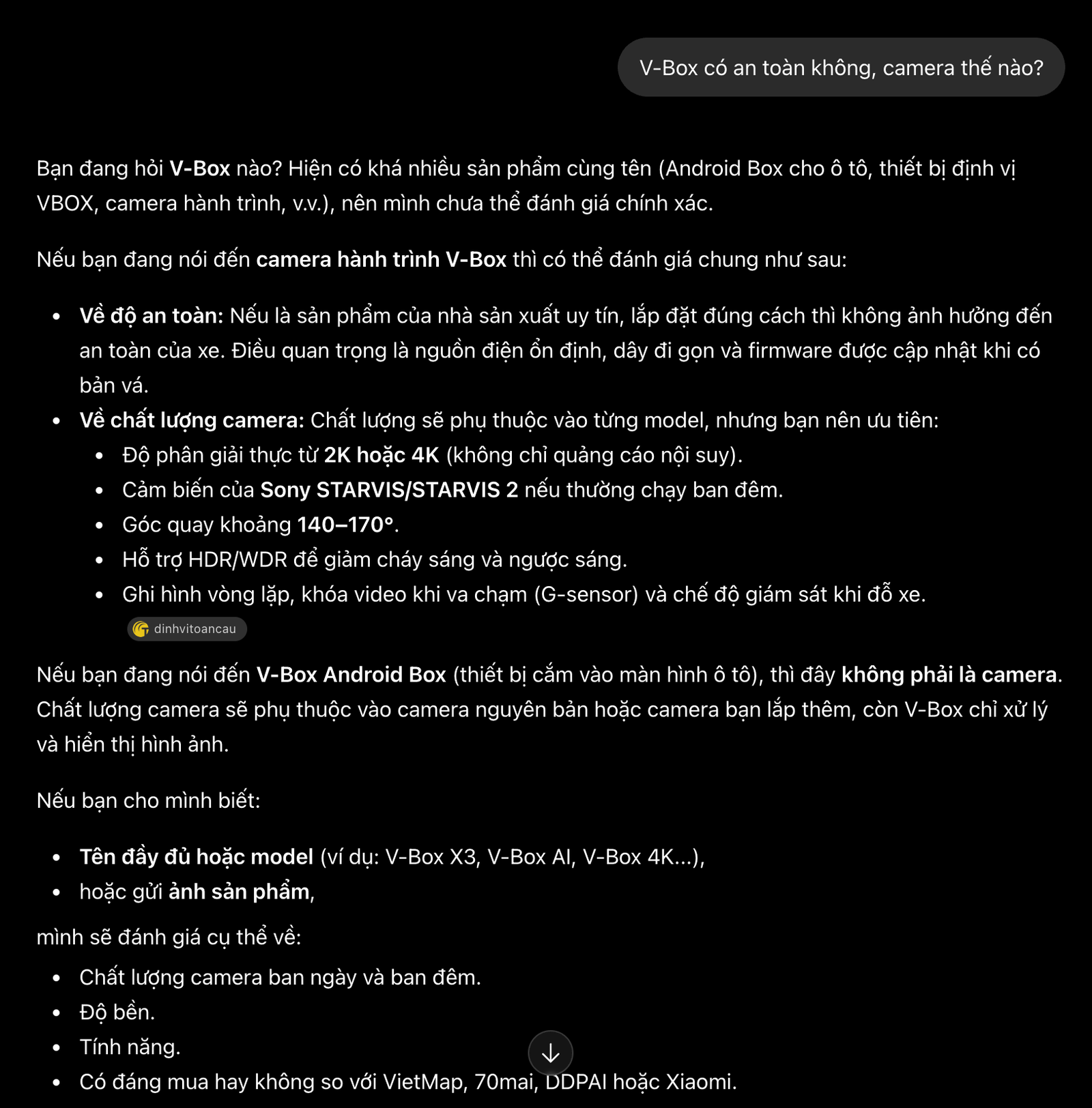
On the composite AI-visibility score, V-Box still sits behind the leaders. That is understandable for a new brand covering few topics. But behind that total number sits a telling detail.
The low composite score doesn’t come from citation quality, but from narrow topic coverage: present in 7 of 80 analyzed topic clusters. The leading indicators are all moving the right way, and the AI-score gap to the leaders narrowed from 16 points (May) to 12 (Aug).
AI citations in Vietnam · Semrush AI Toolkit, Aug 17, 2026. V-Box ranks 2nd, just one citation behind the leader.
Each cell is an analyzed topic cluster. V-Box appears in 7 of 80. All the empty space is room to grow.
This is an analytical conclusion, not a promise. V-Box doesn’t lack citation strength. It lacks reach. A brand AI cites almost as often as the market leader while touching just 9% of topics is a foundation well worth expanding. The next growth lever is clear:
No made-up numbers. Our QC process caught 5 pieces of unverified data before they shipped, including a Wikidata ID in the source brief that turned out to be a rapper’s music album, not a storage company. Every ID was verified through the API before use.
Adapting to platform changes in real time. Mid-project, Google discontinued the Q&A feature on Google Business Profile. We caught it in time, stopped that workstream, and shifted resources to FAQPage schema and the AI answer layer.
Real E-E-A-T standards. Conflict of interest declared per Wikimedia policy, address data updated to the latest administrative changes.
The foundation is in place; results need time for AI and Google to re-crawl and for topic coverage to widen.
AI visibility (Semrush)
22/100
Narrow the gap to the 30–34 group
Topic clusters present
7/80
Expand coverage
Correct-intent traffic (homepage)
1,200/mo
Overtake the old wrong-intent traffic
Authority Score
17
Keep closing on the category top
We don’t promise rankings, because nobody controls the AI algorithms. We commit to building the signals AI uses to choose sources, and to measuring transparently every month.
GEO is optimizing a brand to be found, cited, and recommended by AI engines like ChatGPT, Gemini, and Google AI Overviews. Unlike traditional SEO that targets keyword rankings, GEO focuses on entity profiles, structured data, and citation share.
Yes, and that’s exactly when it matters most. For V-Box in the emerging self-storage category, Hingewise didn’t chase keyword volume; it built a digital identity (Wikidata entity, schema, AI-readable content) to become a source AI cites. The result: V-Box reached the #2 AI-cited source in Vietnam despite almost no established search demand.
Hingewise uses the Semrush AI Toolkit to track mentions, citations, and an AI-visibility score against the competitor set. Every number carries a date and source, and any “AI says X” claim is manually re-verified before it goes into a report.
The foundation (entity, schema, content) takes around 14 weeks. Visibility results need more time for AI and Google to re-crawl and for topic coverage to widen, so Hingewise measures and reports monthly rather than promising rankings.
Or are competitors taking your place every time a customer asks ChatGPT, Gemini, or Google AI? Get a free GEO Snapshot: how you show up today, who’s being cited in your place, and the three things to fix first.