
Perplexity SEO is the practice of optimizing content so Perplexity AI cites it in search answers. Perplexity uses real-time web crawling combined with large language models to synthesize responses, so it favors fresh, clearly structured, and authoritative content. The core difference from ChatGPT optimization: Perplexity is always live-searching the web, making recency and passage extractability the decisive factors.
The case for perplexity SEO is simple: Perplexity processed 780 million queries in May 2025, with around 30 million daily, per CEO Aravind Srinivas at Bloomberg Tech Summit 2025. That number keeps climbing. For every one of those queries, Perplexity is pulling from the live web, picking a handful of sources to cite, and building a synthesized answer in seconds.
Most websites have no idea they’re being evaluated. Or skipped.
Perplexity SEO works differently from Google optimization. Not completely alien, but different enough that your existing approach can get you ranked on Google while leaving you invisible in Perplexity answers. That gap is widening as AI search takes more of the top-of-funnel.
How Does Perplexity Actually Select and Cite Sources?
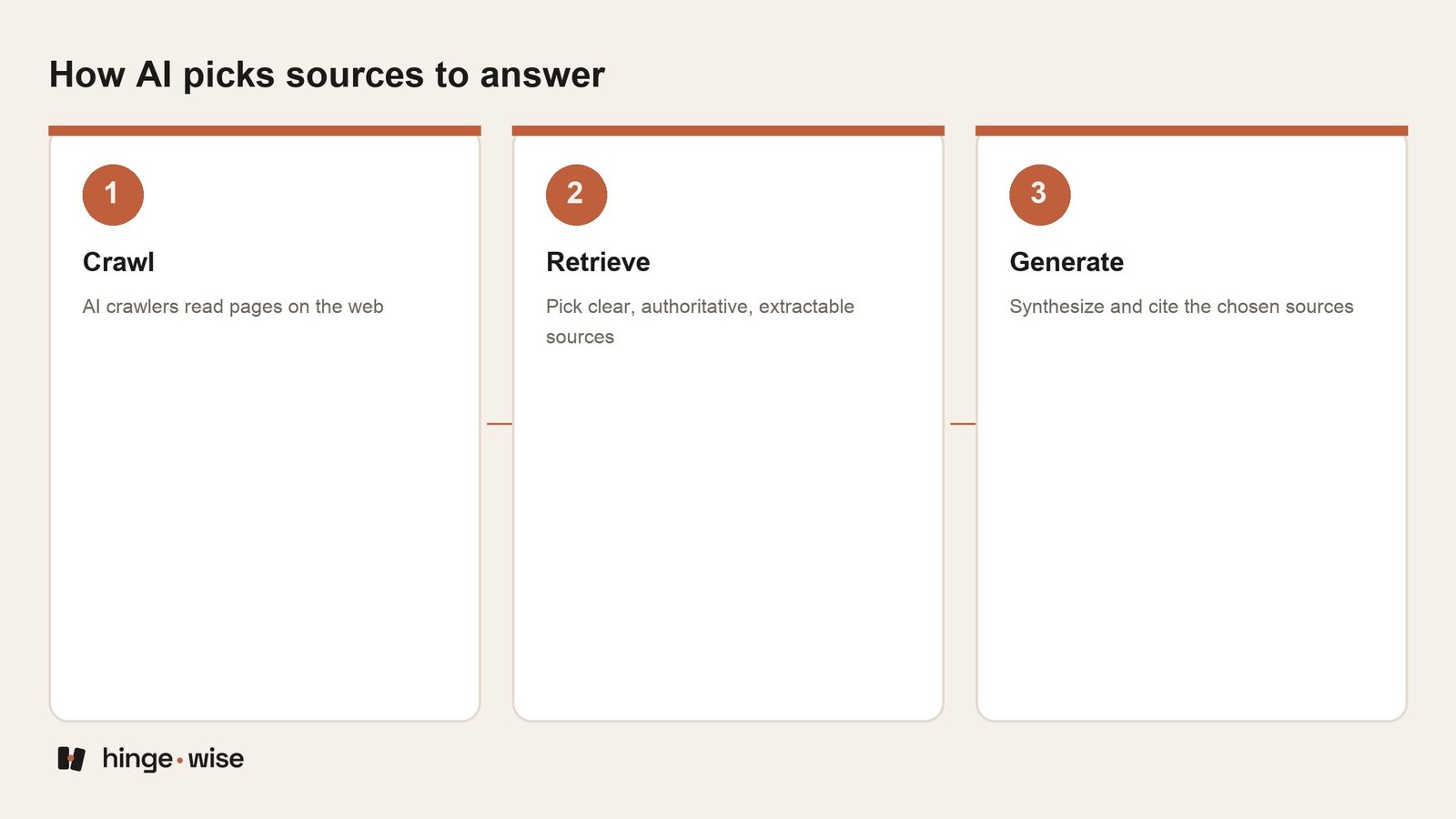
Perplexity combines a real-time search layer with large language model synthesis. When you submit a query, it fires requests through Google and Bing APIs plus its own crawler called Sonar, built on Meta’s Llama model. It retrieves a candidate batch of pages, reads them, and surfaces typically 4-8 citations alongside its answer.
The selection is not purely algorithmic like a Google ranking. Perplexity picks sources that directly answer the question, not just rank for the keyword. It favors pages with structured, extractable content, clear declarative sentences, and fast-loading pages its crawler can actually parse.
One thing most people miss: Perplexity’s Pro Search mode asks follow-up clarifying questions before it searches. That means it is doing more targeted retrieval. Your content needs to match those specific sub-queries, not just the broad topic heading.
Perplexity vs. ChatGPT: What Is Actually Different for Content Optimization?
The biggest practical difference is real-time access. ChatGPT without browsing enabled draws from training data with a fixed cutoff. Perplexity always searches the live web. Fresh, recently indexed content has a genuine shot at citation on competitive topics. That is not something you get from optimizing for ChatGPT’s training corpus.
| Factor | Perplexity | ChatGPT (with browsing) |
|---|---|---|
| Search method | Real-time via Google/Bing APIs + Sonar crawler | Bing-powered browsing (when enabled) |
| Citations shown | Always, prominently numbered | Variable, sometimes omitted |
| Content freshness | Prioritizes recently indexed pages | Training cutoff + optional browsing |
| Answer format | Synthesized answer + clickable source cards | Conversational, less structured |
| Query refinement | Pro Search asks clarifying follow-ups | Single prompt processing (typically) |
Another key difference: Perplexity citations are numbered references users actively click. Getting cited means real referral traffic, not just a brand mention buried inside a paragraph. For anyone measuring content ROI, that distinction is worth paying attention to.
What Makes Content Actually Get Cited by Perplexity?
Answer-first structure matters here more than almost anywhere else in perplexity SEO. Perplexity scans your page for a direct, extractable answer. If your answer is buried after a 200-word introduction, it may pick a competitor who answered the same question in sentence two. Same topic, different outcome.
Based on what I consistently observe across Perplexity queries in 2026, cited pages tend to share these traits:
- Each section opens with a direct, declarative answer, 40-60 words that stand alone out of context
- Headings written as natural language questions, not keyword-stuffed noun phrases
- One clear idea per paragraph, no dense walls of mixed information
- Structured data markup: Schema.org FAQPage, Article, or HowTo where relevant
- Author attribution and a visible publication date on the page
Pages that try to cover everything in one long article tend to get skipped. A tighter, focused page on a specific question often beats a comprehensive guide. Perplexity is not reading for comprehensiveness. It is reading for precision.
The overlap with solid on-page SEO is real, which is good news. The key shift is intent: you are writing to be extractable, not just to rank. Perplexity needs to lift two sentences from your page and have them make complete sense with no surrounding context at all.
How to Do Perplexity SEO: A Practical Step-by-Step
Here is what a practical perplexity SEO workflow looks like, from content structure down to the technical layer.
Answer first, every time. Every page targeting an informational query should open with a clear answer block, 40-60 words, before any background or context. If you would not drop that opening paragraph straight into a Perplexity answer, rewrite it.
Format headings as questions. Not “Benefits of X” but “What Are the Benefits of X?” Natural language questions are what Perplexity processes. Check Google Search Console for the exact phrasing your audience uses and mirror it.
Implement FAQ schema. Perplexity reliably surfaces FAQ-style answers. A properly implemented FAQPage schema (Schema.org) helps the crawler identify Q&A content quickly. This is one of the clearest technical wins in GEO optimization work right now, and the implementation is not complicated.
Make each section self-contained. Perplexity does not read articles front to back. It samples. Each H2 section needs its own context, answer, and example. Avoid cross-references like “as mentioned above”, they mean nothing to a model pulling a snippet.
Fix your technical baseline first. Perplexity’s Sonar crawler needs unobstructed access. Fast load times, no JavaScript-gated content, no aggressive bot-blocking on important pages. If your page takes six seconds to load on mobile, you are already out of the running before anyone reads a word.
Build topical depth, not just breadth. A single well-optimized page can get cited. A cluster of structured content on a topic makes you a consistent citation source across many queries. Perplexity recognizes domain authority signals in ways that parallel how Google evaluates trust.
What About Robots.txt and Perplexity’s Crawler?
This part gets complicated, and I will be upfront about the limits of what I can confirm here. Perplexity has faced scrutiny for using undisclosed crawlers with spoofed user-agent strings, per separate analyses published by Wired and Cloudflare. That means blocking “PerplexityBot” in your robots.txt may not fully prevent it from accessing your content.
For brands focused on growing citation visibility: keep important content open and indexable. Check that your robots.txt is not accidentally blocking legitimate bots you actually want on your site. That is the practical starting point.
For brands trying to block Perplexity entirely: that is a legal and technical problem robots.txt alone cannot reliably solve. A separate conversation.
Does Traditional SEO Still Matter for Perplexity Visibility?
Significantly, yes. Perplexity uses Google and Bing APIs as part of its search layer. Pages that rank well in traditional search are more likely to appear in Perplexity’s candidate pool in the first place. Skipping Google rankings and expecting Perplexity visibility is not a realistic strategy.
That said, ranking position alone is not enough. Position 8 pages get cited over position 1 pages when the content is clearer and more extractable. Traditional SEO gets you into the candidate pool. Perplexity SEO determines whether you get picked from it.
As Semrush‘s GEO research frames it: the strategies for AI visibility and search rankings overlap heavily, writing with clarity, earning credible mentions, keeping content fresh. The execution difference is how extractable your content is at the sentence level, not just whether you rank.
That is the gap most sites have not closed yet.
- Perplexity cites sources from real-time web crawls, not training data, so freshness and passage extractability matter more than traditional ranking position alone
- Each section of your content should function as a self-contained citation unit: direct answer up front, clean structure, specific detail
- Statistics with cited sources and quotations raised visibility in AI answers by roughly 30-40% in Princeton GEO research (Aggarwal et al., 2024), on pages already retrieved as sources
- Perplexity and ChatGPT require different optimization strategies: Perplexity rewards passage clarity and recency; ChatGPT without search rewards broad brand presence in training data
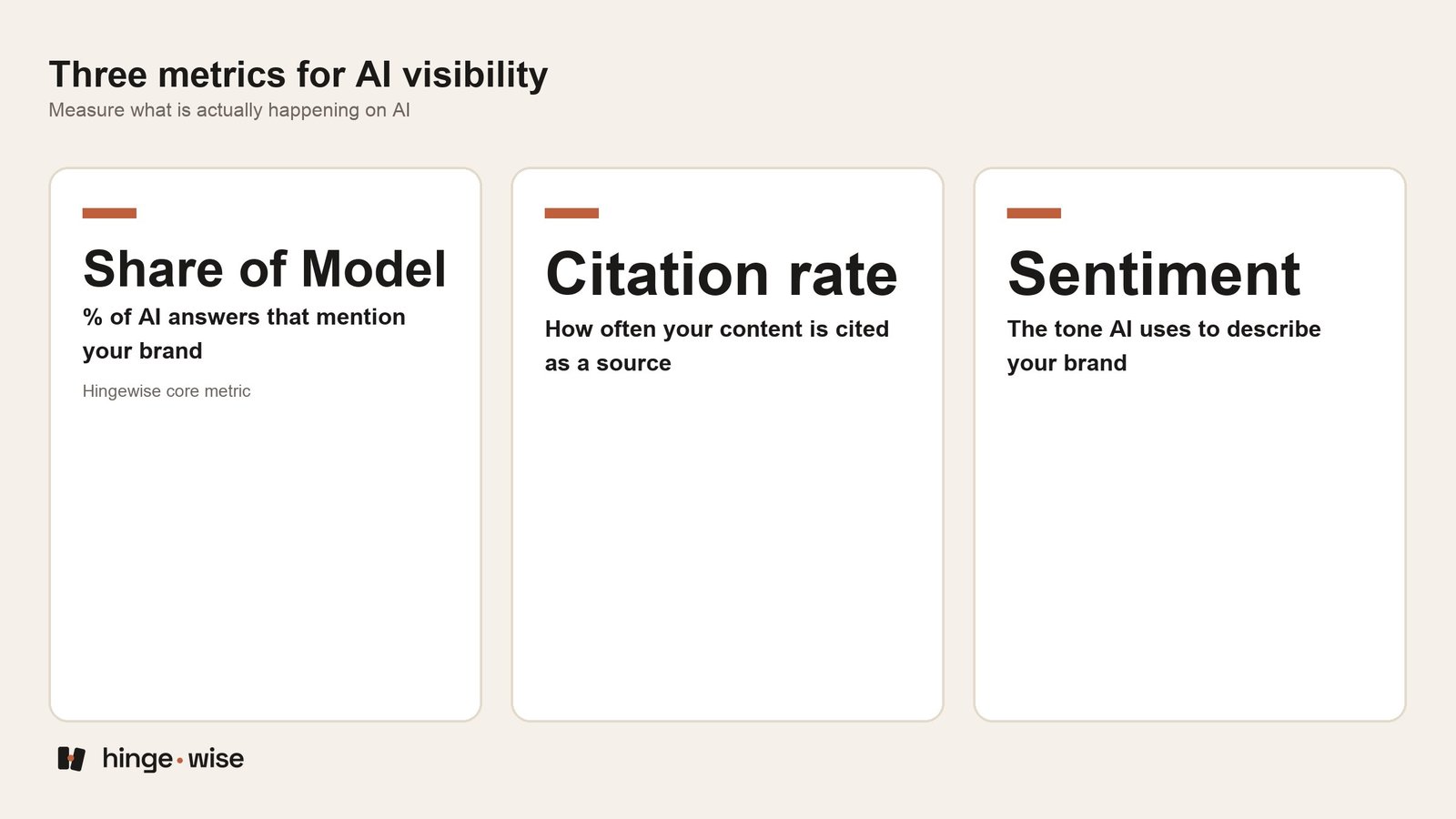
- Track Perplexity citations via manual query testing, Semrush AI Toolkit, and GA4 referral filtering for perplexity.ai
Frequently asked questions
What is Perplexity SEO?
Perplexity SEO is the practice of optimizing content to appear as a cited source in Perplexity AI answers. Unlike traditional SEO, which targets search engine rankings, Perplexity SEO focuses on making content clear, structured, and extractable so Perplexity’s real-time search system selects it and displays it with a numbered citation in the response.
How does Perplexity choose which sources to cite?
Perplexity uses real-time web crawling via Google and Bing APIs and its own crawler to retrieve current content, then uses a large language model to synthesize a cited answer. It favors passages that directly answer the query, come from authoritative domains, are structured clearly enough to extract as self-contained chunks, and reflect recent information.
Is Perplexity SEO different from ChatGPT SEO?
Yes, significantly. ChatGPT without web browsing draws on training data, so optimization relies on building broad brand presence across credible web sources over time. Perplexity always reads live web content at query time, so you optimize for passage extractability, direct answers, and content freshness. The strategies share a foundation in content quality but diverge in mechanism.
Does optimizing for Perplexity also help with Google AI Overviews?
Most tactics that improve Perplexity citation, specifically clear structure, direct answers, cited statistics, and fresh content, also benefit Google AI Overviews and traditional SEO rankings. The strategies are complementary. Perplexity SEO is effectively a focused subset of generative engine optimization (GEO) applied to one specific AI search platform.
How do I track whether Perplexity is citing my content?
Search your target queries manually in Perplexity and check whether your domain appears as a numbered source. In GA4, filter referral traffic for perplexity.ai to track click-throughs from cited responses. Semrush’s AI Toolkit, as of 2026, also tracks AI platform citations at scale, including Perplexity, and can alert you to new brand mentions.
Can a smaller website appear in Perplexity citations, or only high-authority domains?
Both high-authority and smaller domains appear in Perplexity citations. A niche site with highly specific, well-structured content that directly answers a query can outperform a larger site with thin or generic coverage on that exact topic. Passage quality and topical relevance matter, not just domain strength, which means focused sites with clear expertise have a real shot.
Want to see how your brand shows up across AI? Get a free GEO Snapshot.
How we made this: AI helped with research and the first draft. Lam Nguyen chose the topic, edited the piece and checked the figures against their original sources before publishing. How we work: Editorial policy.