To rank on ChatGPT, your content needs to pass two checkpoints: findability and citability. Findability means ChatGPT’s own search crawler can reach and read your pages, and that they are indexed widely, in Bing as well as Google. Citability means pages structured so AI can extract clean answers, and mentioned on credible third-party sources. In ChatGPT, “ranking” means getting cited inside an answer, not appearing in a list.
Something odd happened to a SaaS founder I spoke with recently. His product ranked page one of Google for three core keywords. Strong G2 reviews. Solid domain authority. But every time his sales team asked ChatGPT to recommend tools in their category, the product never showed up. His competitor, smaller site, thinner backlink profile, got cited in nearly every response.
The difference wasn’t SEO strength. It was citability.
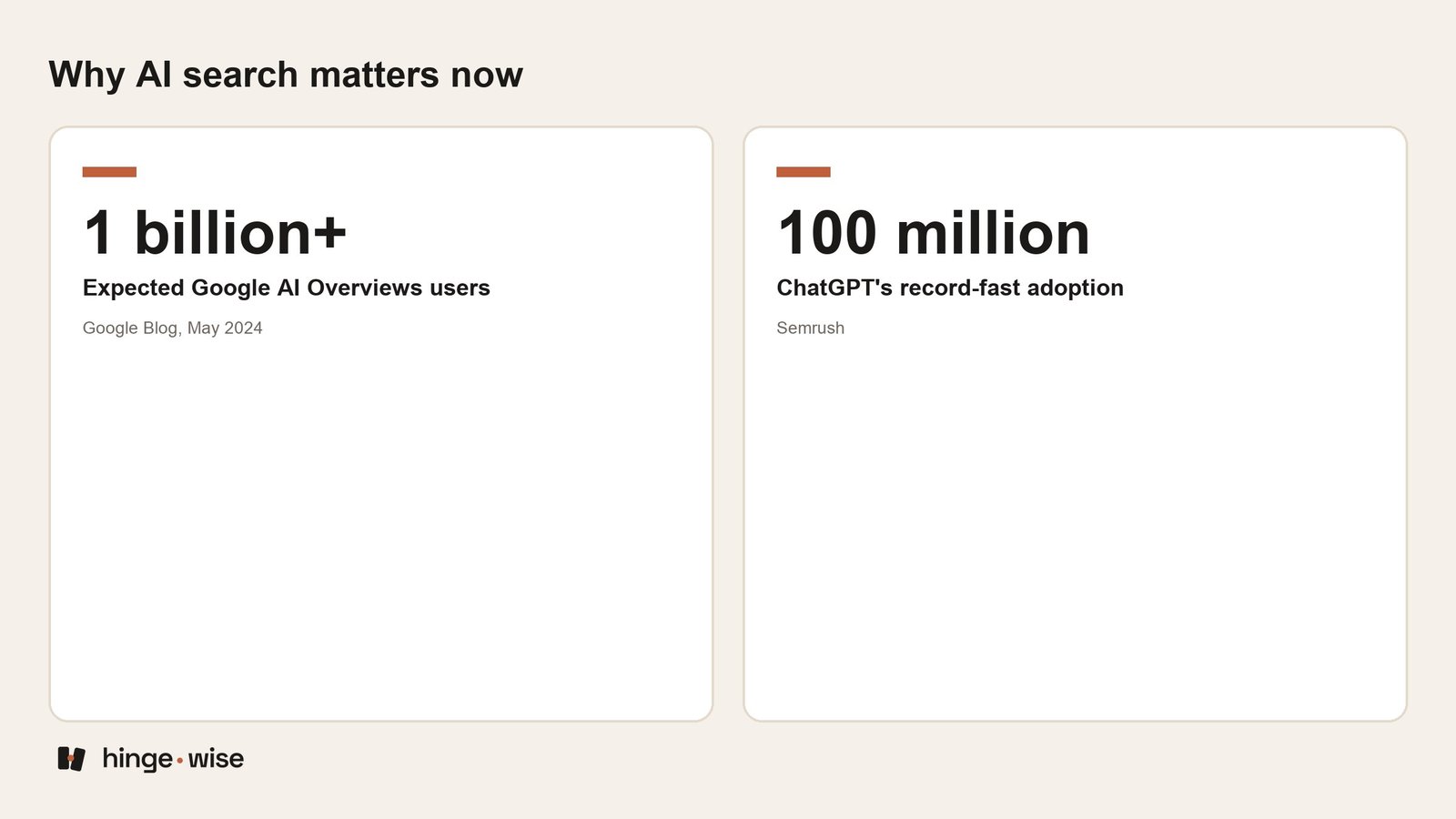
That gap between ranking on Google and getting cited on ChatGPT is what this guide covers. According to Semrush, ChatGPT hit 100 million users faster than any app in history. And as Google noted in their May 2024 AI Overviews announcement, those features now reach billions of users each month. Understanding how to rank on ChatGPT has become a real part of visibility strategy, not a side experiment.
Why ChatGPT Cites Some Brands and Ignores Others
ChatGPT doesn’t rank websites the way Google does. When web search is active, it searches the web, pulls passages it can extract clean answers from, then synthesizes a response. To get cited, your content needs two things: findability by ChatGPT’s search and a structure the model can pull a usable passage from. Most brand pages clear the first hurdle. They fail the second.
The pages that get cited consistently look like well-briefed experts answering a direct question. No preamble. No keyword padding. Question, answer, evidence. The AI is selecting for extractability, not keyword density.
I think this is the most underrated shift in content strategy right now. SEO trained us to optimize for documents. GEO asks us to optimize for passages. That’s a different mental model entirely, and most content teams haven’t made the switch yet.
Worth noting: ChatGPT’s o3 model now actually shows its reasoning process as it searches, making the sourcing behavior more visible than it used to be. If you watch it work through a query, you can see exactly what it’s pulling and why. Extractable passages win. Long introductory blocks of text get skipped.
Step 1: Make Sure ChatGPT Can Find and Read Your Pages
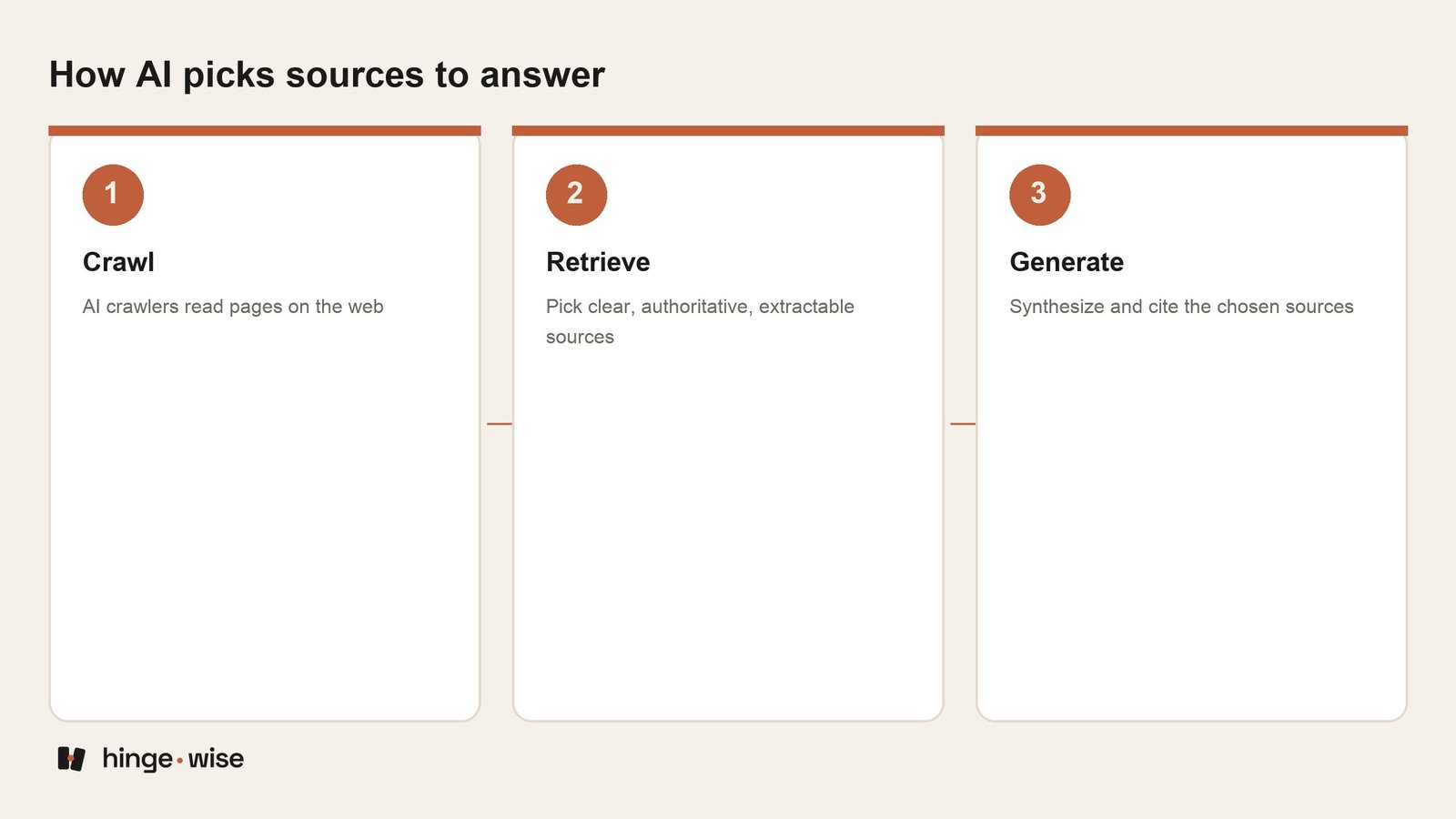
Before any content strategy matters, ChatGPT has to be able to reach your pages. OpenAI runs its own search crawler, OAI-SearchBot, and its OpenAI crawler documentation states that “sites that are opted out of OAI-SearchBot will not be shown in ChatGPT search answers.” So the first check is your robots.txt and any CDN or firewall rules: OAI-SearchBot and ChatGPT-User must be allowed, and your content must be in the HTML rather than loaded only by JavaScript, because AI crawlers generally don’t run scripts.
Then cover the indexes around it. Verify your domain in Bing Webmaster Tools (webmaster.bing.com) and submit your XML sitemap: it is cheap, it feeds Microsoft Copilot, and Bing is one of the sources AI search tools draw on. Do the same in Google Search Console, then run a quick “site:yourdomain.com” search in both to spot pages that are missing, especially newer content or recently restructured sections.
Common blockers include robots.txt rules written only with Googlebot in mind, security settings that block AI crawlers by default, or a sitemap that was never submitted anywhere except Google. These take a day to fix. Fix them first, before anything else.
One honest caveat: being in Bing’s index is not the same as appearing in ChatGPT’s answers. OpenAI doesn’t publish how its search chooses sources, so treat Bing as a cheap box to tick rather than a stand-in for ChatGPT visibility, and always check ChatGPT itself.
Step 2: Write Content That AI Can Actually Pull From
Answer-first structure is the single biggest lever you control. Every section of your content should open with a direct answer in 40 to 60 words, written as a self-contained passage. The model needs to be able to extract that paragraph, drop it into a synthesized response, and have it still make complete sense out of context. If the point only lands in context, the AI won’t cite it.
Think of each H2 section as a mini-answer unit. Perplexity, which actually shows you its sourcing process inline, pulls discrete passages from multiple sites and cites each one. That makes it a useful diagnostic tool: paste your URL into a Perplexity query on your topic and see what it pulls. If nothing comes through, your passages aren’t extractable enough yet.
Practical rules for extractable content:
- Lead every section with the answer first. Context and caveats come after.
- Keep paragraphs under 70 words. Long blocks get passed over.
- Define key terms in single, quotable sentences. Example: “GEO (Generative Engine Optimization) is the practice of structuring content to be cited in AI-generated answers rather than just ranked in search results.”
- Use numbered steps for processes. AI models extract ordered lists cleanly.
- Build comparison tables in HTML text, never as screenshots or image files. AI and web crawlers read text; they cannot read text embedded in images.
As Exposure Ninja documented in their GEO experiments via Moz, generative engines “break down the query to find the best sources and generate unique information each time.” Your content has to survive that decomposition and still be useful as a standalone passage.
Step 3: Build a Citation Footprint on Sources AI Already Trusts
Your own website is one input. What ChatGPT weighs heavily for brand and product queries is what other sites say about you. Reddit threads. G2 reviews. Clutch profiles. Industry comparison posts. Mentions in respected niche publications. If the only content naming your brand is content you published yourself, the model has no corroboration signal, and it will often choose a competitor that does have third-party validation.
Build your off-page citation footprint the same way you’d approach digital PR and third-party validation:
- Claim and fully optimize profiles on G2, Capterra, Clutch, and Trustpilot. These get crawled frequently and cited often by both ChatGPT and Perplexity.
- Get featured in “best of” roundups on respected publications in your space. Even a mention in a listicle on a solid industry blog builds your footprint.
- Answer questions on Reddit and Quora in your category. Both platforms are heavily sourced by AI systems. Niche subreddits especially.
- Pitch digital PR actively. A mention in a credible outlet, even without a dofollow backlink, is a GEO signal that matters.
Semrush’s GEO guide captures this well: “writing with clarity and extractability in mind, getting mentioned by credible sites and platforms, and keeping content fresh” are the core signals for AI visibility. This isn’t exotic strategy. It’s disciplined execution of fundamentals that most sites do inconsistently.
GEO vs. Traditional SEO: What Actually Shifts
Most of what earns you Google rankings also helps you get cited on ChatGPT. The fundamentals carry over. But a few signals shift meaningfully when the goal changes from ranking in a list to being cited in a synthesized answer. Here’s where the differences live:
| Signal | Traditional SEO (Google) | GEO (ChatGPT / AI search) |
|---|---|---|
| Crawler that must reach you | Googlebot | OAI-SearchBot for ChatGPT, plus Bingbot for Copilot |
| Success metric | SERP position | Citation in AI response |
| Content structure priority | Keyword-optimized pages | Answer-extractable passages |
| Authority signal | Backlinks to your domain | Third-party brand mentions and citations |
| Schema markup role | Rich results on eligible page types (FAQ and HowTo rich results are retired) | Reduces friction for AI to parse structure |
| Content length | Comprehensive pages rewarded | Extractable passages matter more than total word count |
The good news: doubling down on GEO doesn’t require rebuilding your SEO. You’re adding a layer. Crawl access for AI, answer-first structure, citation footprint. Everything foundational stays.
What Doesn’t Move the Needle (Stop Wasting Time Here)
Keyword stuffing is counterproductive for GEO. AI models select for clarity and extractability, not repetition. A page that says “best project management software” twelve times is less likely to be cited than a page that clearly answers one direct question about project management software selection once, cleanly.
Publishing AI-generated thin content at volume won’t work either. Moz’s GEO research from Exposure Ninja is clear: generative engines select quality passages, not high page counts. Fifty thin pages won’t outperform one excellent one that answers questions in extractable, well-structured prose.
Waiting for an official ChatGPT citation guide from OpenAI? That’s not coming. They don’t disclose citation logic. Neither does Google for AI Overviews. You optimize based on observable patterns, not published documentation. Uncomfortable for teams that want a rulebook. That’s just the current reality.
If you want to see where your brand stands right now in AI search, the fastest starting point is a structured GEO audit: check that AI crawlers can reach your pages, test your extractability through Perplexity, and map your third-party mention footprint. Hingewise’s GEO Snapshot covers exactly this if you’d rather not build that process from scratch.
- ChatGPT search relies on OpenAI’s own crawler, OAI-SearchBot: make sure it can reach your pages, then submit your sitemap to Bing and Google, before any content strategy matters
- Citability beats keyword density: AI models pull passages they can extract and use independently, not pages with high keyword repetition
- Third-party mentions on G2, Reddit, Clutch, and niche publications signal credibility to AI the way backlinks signal authority to Google
- Answer-first structure, opening each H2 with a 40-60 word direct answer, is the single biggest lever for getting pulled into AI responses
- GEO and SEO fundamentals overlap heavily: you are adding a layer of optimization, not rebuilding your existing strategy
References
Frequently asked questions
Does ChatGPT use Google or Bing for web search?
Not simply either one. ChatGPT search uses OpenAI’s own crawler, OAI-SearchBot, and OpenAI says sites that block it will not be shown in ChatGPT search answers. Being indexed in Bing and Google still helps, because AI search tools draw on the wider web, but it doesn’t guarantee a citation. Check your robots.txt, submit your sitemap to Bing Webmaster Tools and Google Search Console, then test ChatGPT directly.
How do I check if ChatGPT is currently citing my website?
Ask ChatGPT a question on your core topic with web search enabled, then check whether your domain appears in the listed sources. Perplexity is an even more transparent test because it shows all sources inline by default. You can also watch referral traffic from chatgpt.com in your analytics.
Does my website need high domain authority to get cited by ChatGPT?
Not necessarily. Citability depends more on content structure and third-party mentions than raw domain authority. A niche site with strong topical authority and well-structured, answer-first content can outperform a high-DA site that buries its answers deep inside lengthy introductory paragraphs.
Is ranking on ChatGPT the same process as ranking on Google?
No. ChatGPT doesn’t produce a ranked list of links. It synthesizes an answer and cites sources inline. Being cited means your content was judged extractable, on-topic, and credible enough to be included in the response. Google ranking helps as a signal, but citability requires its own separate optimization layer.
Will optimizing for ChatGPT visibility hurt my traditional SEO?
No. GEO best practices, clear writing, earned third-party mentions, topical authority, and structured data, overlap directly with what Google already rewards. You are not trading one for the other. What gets you cited on ChatGPT tends to improve overall content quality in ways that benefit Google rankings as well.
What types of content get cited most often in ChatGPT responses?
Content that opens sections with direct answers, uses numbered steps for processes, includes HTML comparison tables, and appears across credible third-party sources gets cited most consistently. Definitions written as single, quotable sentences are particularly effective. Perplexity’s transparent sourcing makes it a practical testing tool to check what gets pulled from any given page.
Want to see how your brand shows up across AI? Get a free GEO Snapshot.
How we made this: AI helped with research and the first draft. Lam Nguyen chose the topic, edited the piece and checked the figures against their original sources before publishing. How we work: Editorial policy.