
GEO for B2B SaaS means optimizing your content so AI tools like ChatGPT, Perplexity, and Gemini recommend your product when buyers research software. B2B buyers increasingly ask AI assistants to build shortlists before contacting vendors. Without GEO, your product is invisible at the most critical moment in the buying journey.
A procurement manager at a 150-person tech company opens Perplexity and types: “best project management tools for engineering teams, Jira alternatives.” Perplexity runs four background searches in seconds, surfaces its cited sources, and returns a clean summary with five products. Three of those products have structured comparison pages AI can parse easily. Two appear because G2 and independent analyst blogs cite them consistently.
Your product might be technically better than all five. Doesn’t matter. If it’s not in that response, it doesn’t exist to that buyer.
That’s the GEO problem for B2B SaaS right now. And most SaaS marketing teams are still running 2023 playbooks.
How B2B Buyers Actually Research Software Now
B2B software buyers increasingly skip Google for the initial research phase and open ChatGPT or Perplexity instead. They get a synthesized shortlist with 4-5 recommended products before ever visiting a vendor site. The consideration set is decided before your SDR sees a demo request. That’s the core shift driving the urgency around GEO for B2B SaaS.
The queries look like this: “What’s the best CRM for a remote sales team of 20?” Or “HubSpot alternatives that handle complex B2B deal cycles without the enterprise price tag.” These used to produce SERP pages buyers clicked through. Now they produce AI-generated summaries with an embedded shortlist.
Google’s own AI Overviews reached over a billion users, as Google announced in May 2024, with complex, multi-step research queries being a core use case. HubSpot’s State of Marketing Report 2025 still shows website, blog, and SEO as the top ROI channel for B2B brands. The channel is intact. What’s changed is that “appearing on the web” now includes AI-generated responses, not just ranked pages.
GEO, AEO, and SEO Are Three Different Surfaces
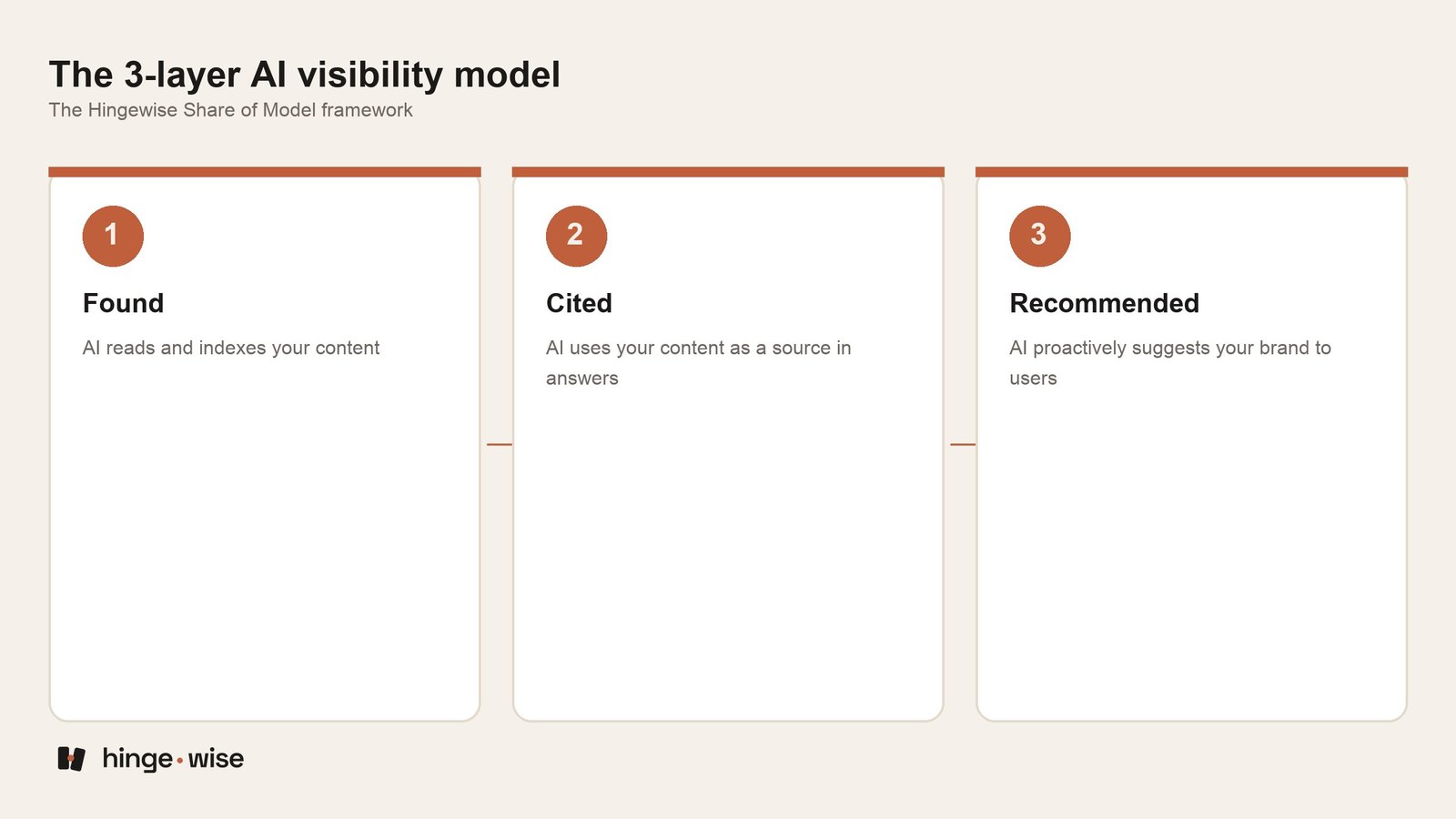
SEO gets you on Google and Bing. GEO (Generative Engine Optimization) gets your product cited in AI-generated responses on ChatGPT, Perplexity, and Gemini. AEO (Answer Engine Optimization) structures your content so AI tools extract clean, usable answers to specific questions. For B2B SaaS, all three matter, but they target different signals and you can’t treat them as one thing.
| Strategy | Target Surface | Primary Goal for SaaS | Key Signals |
|---|---|---|---|
| SEO | Google, Bing results pages | Rank for category and comparison keywords | Backlinks, technical quality, content relevance |
| GEO | ChatGPT, Perplexity, Gemini, AI Overviews | Get cited or recommended in AI-generated shortlists | Citability, third-party authority, structured content |
| AEO | All AI and voice search surfaces | Own the specific questions buyers ask about your category | Direct answers, FAQ schema, self-contained passages |
Strong SEO creates the indexed content and backlink authority AI tools pull from. But GEO requires additional signals: content structured for extraction, citation patterns from trusted third parties, and direct answers to the comparison queries buyers run in AI tools. A site can rank well on Google and still be absent from Perplexity responses. Different surfaces, different optimization.
Which Queries Actually Build the AI Shortlist
AI-generated recommendations for B2B SaaS are triggered by specific, high-intent query patterns. “Best [category] for [use case],” “[Competitor] alternatives,” and “[Product A] vs [Product B]” are the queries that form the shortlist. If your content doesn’t address these patterns directly, you’re absent from consideration before the conversation starts. These are the queries your GEO strategy should be built around.
Perplexity is transparent about this process. It shows its sources inline and you can watch it run background searches in real time. ChatGPT’s search mode does similar work but is less explicit. The pattern I track across these platforms consistently: products that appear in AI responses have structured content addressing these query types, and citations from sources buyers already trust.
What I’ve also noticed: if you’re not ranking for these queries in traditional Google search, you’re almost certainly invisible in AI responses too. The signal overlap is higher than most guides acknowledge. Fix the SEO gap and you’re partially fixing the GEO gap. Partially. Not fully.
Comparison and Alternatives Pages Are Your Highest-Leverage GEO Asset
For B2B SaaS, comparison and alternatives pages are the single most important content type for GEO. When a buyer asks Gemini “best Salesforce alternatives for mid-market B2B,” Gemini looks for content that directly addresses the question. A page titled “Salesforce Alternatives: How [Your Product] Compares” with a clear table, explicit use case fit, and specific differentiators gives AI something concrete to extract and cite.
The structure that works for these pages:
- Direct opening paragraph that states who your product is best for. Not “we’re the best for everyone.” Something specific: “Built for B2B sales teams that need deal-cycle tracking without a six-month implementation.”
- HTML comparison table with feature-by-feature or pricing-tier breakdowns. Screenshots of tables are invisible to AI crawlers. HTML text is not. Basic distinction, wrong on too many SaaS sites.
- Use case fit section that covers where you win and, honestly, where you don’t. This is the counterintuitive part.
- FAQ section with the specific questions buyers ask when switching from a competitor.
On the honesty point: SaaS companies that include “when not to choose us” sections on their comparison pages get cited more frequently in AI responses, based on what I observe across Perplexity and ChatGPT search. I’m not certain exactly why Google or Anthropic weight this, since neither publishes those ranking factors explicitly. But the pattern holds across product categories. Content that reads like pure promotional copy performs worse than content that reads like an honest evaluation.
And if you don’t build these pages yourself? A third-party site or a direct competitor will define those comparisons for you. That’s the worse outcome.
How to Structure SaaS Content for AI Citation
AI tools extract the first clear, self-contained passage they find under a heading. For SaaS content to be cited reliably, every key section should open with a direct answer. Not a setup, not context, not a question restated. The answer first. Then the supporting detail. This is the opposite of how most SaaS content has been written for the past decade.
Two other things that matter:
Third-party citations from sources buyers trust. G2, Capterra, and TrustRadius are platforms AI tools pull from regularly when answering B2B software queries. A consistent, well-reviewed presence across these platforms builds the citation pattern AI systems associate with category authority. Think of it as the GEO equivalent of backlinks. It compounds the same way.
Schema markup. SoftwareApplication schema, FAQ schema, and Product schema give AI systems structured signals about what you sell and who it’s for. Google doesn’t publish exactly how schema affects AI Overviews citations. But based on what shows up in practice, implementing it is low effort relative to the upside.
Run a GEO Audit on Your SaaS Product Right Now
To check your current GEO visibility for B2B SaaS, open Perplexity and run your top five buyer queries. Note what appears and which sources get cited. Then check whether your site has direct-answer content, comparison pages for your main competitors, and a current presence on the review platforms AI tools reference. That gap list becomes your content roadmap.
Work through this in order:
- Search your product name in Perplexity. Which sources does it pull? If the answer comes only from your own site, your third-party citation coverage needs work.
- Search “best [your category] for [your target use case].” Does your product appear? If a competitor does and you don’t, compare their content structure to yours.
- Search “[main competitor] alternatives.” Is your product listed as an option?
- Open your key landing pages and your existing comparison pages. Do they lead with direct answers, or do they bury the point in paragraph three?
- Check your G2 and Capterra profiles. Are they current, detailed, and actively collecting reviews?
Most of the fixes are content work. Building dedicated comparison pages, rewriting section openers to lead with answers, and maintaining consistent review profiles. The technical pieces, schema and page structure, come after. Get the content architecture right first.
- B2B buyers increasingly use ChatGPT, Perplexity, and Gemini to build software shortlists before ever talking to a vendor – GEO for B2B SaaS gets your product into those shortlists.
- GEO, AEO, and SEO target different surfaces with different signals. You need all three, and you can’t treat them as one optimization.
- Comparison pages and alternatives pages are the highest-leverage GEO asset for any SaaS product – build them or let a competitor define the comparison for you.
- AI tools extract the first clear, self-contained answer they find. Lead every key section with the answer, not the setup.
- Third-party citations from G2, Capterra, and TrustRadius build the authority pattern AI systems rely on – treat review platform presence as a GEO investment, not an afterthought.
Frequently asked questions
What is GEO for B2B SaaS?
GEO (Generative Engine Optimization) for B2B SaaS is the practice of optimizing content so AI tools like ChatGPT, Perplexity, and Gemini recommend your product when buyers research software. It focuses on citability, direct-answer content structure, and third-party authority signals rather than traditional keyword ranking on search engine results pages.
How is GEO different from SEO for SaaS companies?
SEO targets rankings on Google and Bing. GEO targets AI-generated responses on ChatGPT, Perplexity, and Google AI Overviews. For SaaS, GEO requires answer-first content structure, strong third-party citations from platforms like G2 and Capterra, and dedicated comparison or alternatives pages that AI can extract and summarize when buyers ask for software recommendations.
What content types work best for SaaS GEO?
Comparison pages, alternatives pages, and clearly structured FAQ content perform best for SaaS GEO. These page types directly address the high-intent queries buyers use in AI tools. Content with HTML comparison tables, direct-answer section openers, and FAQ schema gets cited most frequently in AI-generated responses across ChatGPT, Perplexity, and Gemini.
Does presence on G2 and Capterra help with AI search visibility?
Yes. AI tools like Perplexity and ChatGPT search pull from trusted third-party sources including G2, Capterra, and TrustRadius when answering B2B software research queries. A consistent, well-reviewed presence on these platforms builds the citation authority AI systems associate with your product category, similar to how backlinks signal authority in traditional SEO.
How do I check if my SaaS product appears in AI recommendations?
Run your target queries directly in Perplexity, ChatGPT search, and Gemini. Search “best [your category] tools,” “[competitor] alternatives,” and your product name. Note which sources get cited in each response. If competitors appear consistently and your product doesn’t, you have a GEO gap that structured comparison content and third-party citation work can address.
Can a smaller SaaS product compete with category leaders in AI search?
Yes, especially for niche queries. AI tools match products to specific use cases and company sizes rather than just recommending category leaders. A focused CRM built for freelance consultants can appear in responses to “best CRM for solo consultants” even without outranking Salesforce on broad terms. Clear niche positioning and specific use case content are the competitive edge here.
How we made this: AI helped with research and the first draft. Lam Nguyen chose the topic, edited the piece and checked the figures against their original sources before publishing. How we work: Editorial policy.